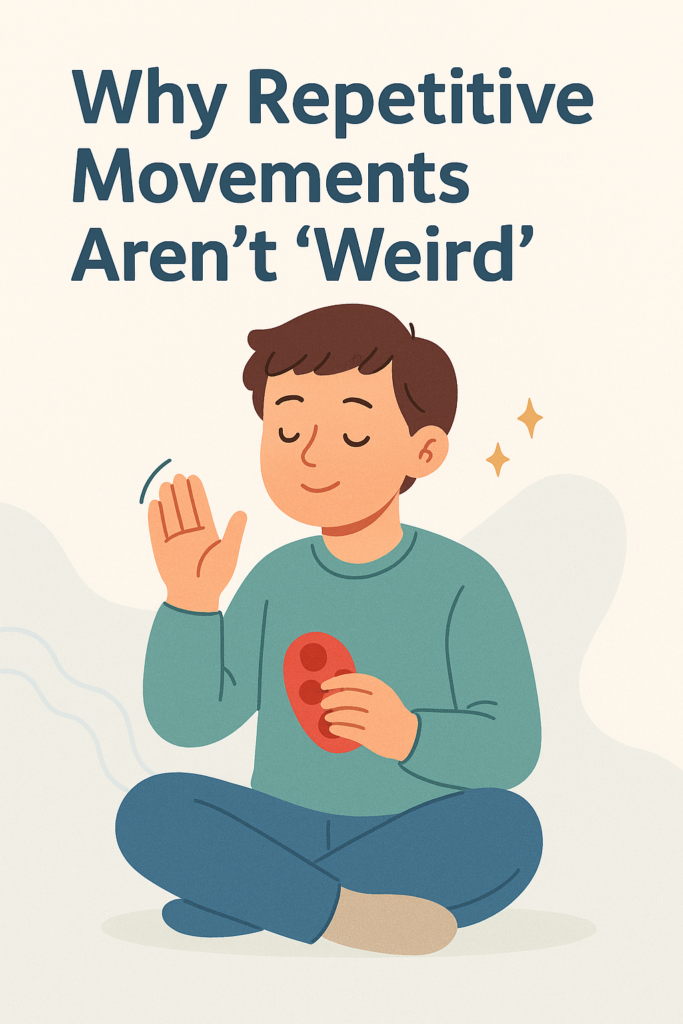
🌟 Have you ever wondered why some autistic people rock, flap their hands, or fidget repeatedly? 🌟
These movements, called stimming—short for self-stimulatory behavior—aren’t random. They are a natural and important part of daily life, serving as a way to soothe anxiety, express emotions, or enjoy sensory input. Understanding stimming helps us see the world through the perspective of autistic individuals and respect how they regulate their emotions and environment.
What Is Stimming?
Stimming can take many forms:
- Repetitive movements: Rocking, hand-flapping, spinning.
- Vocalizations: Humming, repeating words or sounds.
- Object-focused behaviors: Fidgeting with a pen, tapping surfaces, or playing with small items.
While these behaviors may seem unusual to outsiders, they are meaningful and functional for the person doing them.
Why Do People Stim?
- Self-Regulation: Stimming helps manage emotions. When someone feels anxious, overwhelmed, or excited, repetitive movements or sounds provide a calming rhythm.
- Sensory Comfort: Many autistic individuals process sensory input differently. Stimming can satisfy sensory needs, helping the person feel grounded.
- Expression of Feelings: Stimming is also a non-verbal way to express emotions—joy, frustration, or excitement—when words might be hard to find.
- Focus and Concentration: Some people stim to help think, solve problems, or maintain attention.
Common Misconceptions
- It’s “bad” or “wrong”: Stimming is a natural coping mechanism. Trying to stop it can create stress or anxiety.
- It’s always obvious: Some stimming is subtle, like foot-tapping or finger-fidgeting, and may go unnoticed.
- It reflects ability or social skill: Stimming is unrelated to intelligence or social understanding. It’s simply a tool for self-expression and regulation.
Supporting Healthy Stimming
Parents, caregivers, educators, and friends can help by accepting stimming and providing safe alternatives if needed. Options might include:
- Stress balls or fidget toys
- Designated movement breaks
- Creating sensory-friendly spaces
By understanding stimming, we create an environment where autistic individuals can express themselves safely, comfortably, and confidently.
Bottom Line:
Stimming is not a flaw—it’s a coping strategy, a sensory outlet, and a form of self-expression. Accepting it can help autistic people navigate life more comfortably and authentically.